
There is a gap that stops most leaders from becoming who they want to be.

It is not a gap in knowledge. It is not a gap in desire.
It is a gap between knowing and doing — consistently, under pressure, when it matters most.
If you have been following this series, you have already done meaningful work. You have identified the internal patterns that pull you away from your best self. You have gained clarity about who you are when you are at your best.
Now comes the part most leadership development skips entirely.
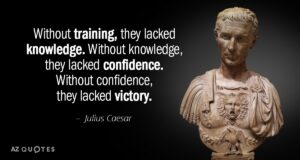
Training.
Why Good Intentions Are Not Enough
Most leaders, when they gain clarity about who they want to be, feel a surge of motivation. They think: “This makes sense. I just need to be more intentional.”
And for a few days — maybe even a few weeks — they are.
They pause more. They listen better. They try to apply what they’ve learned.
Then pressure returns.
Deadlines pile up. A difficult conversation arises. A mistake is made.
And in that moment, they revert.
Not because they failed. But because they defaulted to what is most practiced.
Here is the neurological reality: your brain will always take the strongest, most efficient pathway available. If your best self is not well-practiced, it will not show up under pressure. You don’t rise to the level of your intentions — you fall to the level of your training.
The Fitness Analogy That Actually Holds Up
Most people understand what it takes to get physically fit. Eat well. Exercise consistently. Recover properly. No mystery there.
And yet millions of people hire trainers.
Not for information — they already have that. They hire trainers for structure, accountability, and consistency. Because knowing what to do is not the same as doing it, day after day, when motivation is low and life is full.
Leadership development is no different.

A Practical System for Consistent Growth
Here is a simple framework you can begin using today.
1. Anchor to your Best Self Statement [instructions for your best self statement]. This is your target. Without it, growth stays vague. With it, growth becomes directional — your brain knows what it is reinforcing.
2. Choose 2–3 critical behaviors. Translate your identity into action. Ask: “If I were consistently living as my best self, what would I do differently?” Maybe it’s pausing before responding in tense conversations. Maybe it’s asking one genuine question before giving direction. Keep it simple — if you choose ten behaviors, you will execute none.
3. Use your day as a training ground. Every meeting, every conversation, every moment of pressure is a rep. You don’t need more time. You need more intentional reps.
4. Reflect for five minutes at the end of each day. Ask yourself: Where did I show up as my best self today? Where did I default to old patterns? What triggered that shift? This is not self-criticism — it is the awareness that accelerates real neurological change.
5. Repeat — because that is where change actually happens. One good day does not change you. But sustained, repeated practice does. Over time, your responses slow down, your thinking clears, your behavior becomes more consistent. Eventually your best self is not something you try to be. It is simply who you are.
What Consistent Training Produces
This is not just personal development — it is performance.
When leaders train consistently, emotional reactivity decreases. Communication improves. Trust deepens. Teams become more engaged and accountable. And culture begins to shift — not because of a new initiative, but because the leader is genuinely different.
That difference compounds over time in ways that no workshop or one-time training ever produces.

A Final Question
You now have awareness of what gets in your way. You have clarity about who you are at your best. And you have a system to begin practicing it.
The question is not whether you can change. You can.
The question is whether you will train.
If you know who you are at your best — and you know how to practice it — what would happen if you actually committed to training it, every day?
Your answer to that question is not hypothetical. It is the future of your leadership.
Ready to stop going it alone?
Most leaders who try to implement this on their own start strong — and fade. Not because they lack commitment, but because consistency is genuinely hard without structure and accountability.
If this letter resonated with you, click here to schedule a complimentary 30-minute coaching call — no obligation, just a real conversation about where you are and what consistent growth could look like for you.