
In my last blog post, I introduced the idea of NeuroLeadership and shared what may be the nicest thing anyone has ever said to me.
What made my wife’s words so meaningful wasn’t just the compliment. It was the implication: I had changed.
Not temporarily. Not performatively. But observably.
That change did not happen by accident. It happened after months, even years of focused work that paid off because of neuroplasticity.
And if you lead people, you need to understand what that means.
Neuroplasticity: Your Brain Is Not Fixed
Neuroplasticity is the brain’s lifelong ability to rewire itself in response to repeated thought, emotion, and behavior. Scientists once believed the brain was largely fixed after childhood. We now know that isn’t true. A zebra can “change its stripes”!
Neural pathways strengthen with use. The brain changes structurally and functionally based on what we repeatedly think and do.
- Rehearse irritation → irritation becomes easier.
- Practice gratitude → gratitude becomes more natural.
- Default to criticism → criticism becomes automatic.
- Train curiosity → curiosity becomes accessible under pressure.
You have probably heard that “practice makes perfect.” That’s actually not true. Practice makes permanent. Only perfect practice makes perfect!
Repeated patterns, including mental patterns become well-worn roads.
The good news? Roads can be repaved.
The sobering news? They will be repaved — intentionally or not.
Leadership, then, is not just about influencing others. It is about intentionally shaping the neural patterns that shape your influence.
The Leadership Brain Under Pressure

In the previous blog post, I mentioned the amygdala — our threat detector — and the prefrontal cortex — our center for executive functioning, empathy, creativity, and strategic thought.
When leaders are stressed, rushed, or under threat, their brains shift toward survival mode. Cortisol rises. Cognitive flexibility narrows. Patience shortens. Listening decreases.
In that state:
- We interrupt more.
- We react faster.
- We assume negative intent.
- We over-control.
- We micromanage.
We don’t choose these behaviors consciously. They emerge from deeply conditioned neural pathways.
This is why insight alone rarely changes leadership behavior.
You can understand psychological safety.
You can believe in emotional intelligence.
You can value collaboration.
And still snap at someone in a meeting.
Because understanding does not override wiring.
Training does.
Mental Fitness: Strengthening the Leadership Muscle
If neuroplasticity is the brain’s ability to change, mental fitness, your ability to respond to life’s challenges in a productive way is achieved through the disciplined practice of directing that change.
Think of it this way:
You don’t become physically fit by understanding muscle physiology.
You become fit through repeated, intentional practice, a.k.a. exercise.
The same is true of the brain.
Mental fitness is actually exercising your brain with consistent training of attention, emotional regulation, and response patterns so that under pressure, your best self shows up — not your most conditioned self.
This is not positive thinking.
This is not denial of stress.
This is not pretending everything is fine.
This is strengthening the neural pathways that allow you to:
- Pause before reacting.
- Stay curious when challenged.
- Maintain perspective under pressure.
- Regulate emotion before it spills onto others.
- Lead from intention instead of impulse.
Over time, these practices physically reshape the brain.
And when the brain changes, behavior changes.
Why This Matters More Than Ever
Today’s workplace is cognitively demanding and emotionally loaded.
Uncertainty. Speed. Complexity. Hybrid environments. Global tension. Economic pressure.
Your team’s nervous systems are absorbing all of it.
If leaders unintentionally amplify threat — through tone, urgency, ambiguity, or criticism — they push people into survival mode. Creativity shrinks. Risk-taking declines. Engagement drops.
But when leaders regulate themselves and create clarity, safety, and challenge without threat, they activate the prefrontal cortex.
Innovation increases.
Trust deepens.
Ownership rises.
Performance improves.
This is not soft leadership.
It is neurologically intelligent leadership.
Five Mental Fitness Practices for Leaders
Let me offer five practical practices you can begin immediately.
These are not theoretical. They are trainable.
1. The 90-Second Reset
When you feel irritation, defensiveness, or stress rising, pause.
Neuroscience suggests that the chemical surge of an emotional reaction lasts about 60–90 seconds unless we keep re-triggering it with our thoughts.
Instead of reacting:
- Take a slow breath.
- Notice the sensation in your body.
- Label the emotion (“I’m feeling defensive.”).
Labeling emotion reduces amygdala activity and increases prefrontal activation.
This is not weakness.
This is neurological skill.
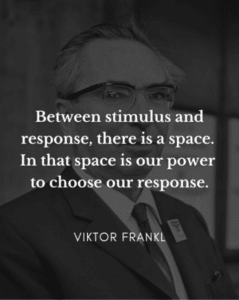
2. Shift from Judgment to Curiosity
Under stress, our brains default to judgment:
- “They don’t care.”
- “This is incompetent.”
- “He should know better.”
Judgment narrows thinking.
Curiosity reopens it.
Replace:
“What’s wrong with them?”
With:
“What might I be missing?”
This subtle shift moves the brain out of threat and into exploration.
Curiosity is a leadership superpower because it protects relationships while still addressing performance and promoting creativity.
3. Train Attention Daily
Where attention goes, neural wiring grows.
If your attention constantly scans for problems, flaws, and risk, your brain becomes efficient at detecting them — sometimes excessively so.
Balance that by deliberately scanning for:
- Progress.
- Effort.
- Strengths.
- Small wins.
This does not ignore problems.
It prevents your brain from being hijacked by them.
Two minutes a day of intentional gratitude or strength recognition can begin rewiring attention patterns.
4. Separate Signal from Story
When something happens, there is:
- The event (signal).
- The interpretation (story).
Example:
Signal: A team member misses a deadline.
Story: “They don’t respect me.”
The brain loves stories because stories create certainty.
But stories are often inaccurate.
Mental fitness involves asking:
“What are the facts?”
“What assumptions am I adding?”
This practice protects relationships from unnecessary damage.
5. Build Micro-Recovery Into Your Day
Chronic stress reduces cognitive capacity.
Leaders often pride themselves on endurance. But endurance without recovery degrades the brain.
Research consistently shows that short recovery breaks improve executive function.
A 3-minute breathing reset.
A brief walk.
A moment of reflection before the next meeting.
Micro-recovery keeps your prefrontal cortex online.
A regulated leader regulates the room.
From Self-Management to Culture Design
Here is where this becomes powerful.
When leaders train their own brains, they begin shaping team culture.
Calm becomes contagious.
Curiosity spreads.
Respect multiplies.
Psychological safety increases.

Neuroscience calls this interpersonal neurobiology — the idea that brains influence one another.
Your emotional state is not private.
It is transmitted.
Which means your mental fitness is not personal development fluff.
It is a strategic leadership asset.
The Compounding Effect
Neuroplastic change happens through repetition.
One pause will not transform you.
One gratitude reflection will not rewire your brain.
One curious question will not redefine your culture.
But repetition will.
Tiny, consistent neural reps compound.
Months later, someone might say:
“You’re different.”
“I feel heard.”
“I’m glad to work here.”
“I trust you.”
And you may not even remember when the shift began.
That is the quiet power of neuroplasticity.
A Leadership Question
Let me return to the question from my last letter:
Would people say,
“I’m glad you’re my boss”?
Not because you are easy.
Not because you lower standards.
Not because you avoid hard conversations.
But because:
- You regulate yourself.
- You respond thoughtfully.
- You challenge without humiliating.
- You care about their growth.
- You create conditions where they can thrive.
That kind of leadership is not personality-driven.
It is practice-driven.
The Future of Leadership Is Trainable
For years, we assumed leadership capacity was mostly fixed — temperament, charisma, innate presence.
Neuroscience tells a different story.
Your leadership identity is plastic.
Your emotional patterns are adaptable.
Your relational impact is trainable.
You are not condemned to repeat your stress habits.
You are not stuck with your default reactions.
You are not limited to your wiring.
You can reshape it.
That is hopeful.
That is empowering.
That is responsible.
Because once you know your brain can change, you can no longer say, “That’s just how I am.”
Stay Tuned
Next time, I will provide you with a simple way to bring clarity to your best self. In other upcoming posts, I will unpack practical frameworks that help operationalize this work inside organizations — integrating Emotional Intelligence, Positive Intelligence, and strengths-based development into daily leadership rhythms.
For now, begin here:
Pause.
Notice.
Choose.
Repeat.
NeuroLeadership is not about manipulating others. It is about mastering yourself so that others can flourish.
And if one day someone says to you,
“I’m actually glad to work with you,”
you will know:
The wiring changed.
The habits shifted.
The leader evolved.
And so did the culture.
To learn more about my 7-week mental fitness training program and get your free Saboteur Assessment, click here: Mental Fitness Course